

Cinnamon In The Bath
a glimpse into my past through a bath, a breakup, a book, and an album.

Written on 19/2/25
The only music I can currently stomach is music without human voices. I want depersonalised noise—something droning, nostalgic, and heavy with repetition. I want something to lull my head into submission. Electronic ambient music is perfect for these occasions: it turns all my thoughts into vibrations.
I was in the bath earlier with my speaker propped on the ledge above my head. My ears, mouth, cheeks, forehead—everything but my nose, which peeked out like a snorkel—were submerged underwater. I felt the vibrations of the music travel through the liquid. The melodies came to me muted but amplified, vibrating mellowly in my ears.
Hold on while I make myself another cup of tea. Té de canela y clavo. It makes me think of my abuelita. I miss her so I drink spiced tea and think of her. Sweet, warm. I cup it close as I return to type to you.
I drank my lukewarm tea in the bath. I had spent too long on my phone while letting the water fill up so the water was a little bit warmer than the temperature of my body when I got in. It felt like I was entering an embryonic sac of milk that held me temperately; as if some of my own liquid had seeped into the bath to merge with that which contained me. Lifting the tea, cinnamon and clove, up to my lips, I missed my mouth and let some of the brown tea tinge the water near my chest while I took in my first sip. It slowly dispersed into the rest of the bath, fading out into oblivion as the water got colder and colder with each passing minute.
The book I was reading kept me company as the water turned cold. Shon Faye’s Love In Exile was a trusty companion through the breakup I was experiencing. I hadn’t been thinking much about love since the rip happened. I had mostly kept my brain preoccupied with yearning for something outside of my current reality as I settled into the acceptance of having to part ways with the life I’d grown to know as home in London.

It feels like Shon Faye is holding my hand with her language as I read, guiding me gently toward the light of awareness, toward the light of understanding.
Despite knowing that a breakup feels like a shattering of the lens on the camera you’ve been using to take the pictures of your life thus far, having that knowledge doesn’t save you from the feeling. What saves you from the feeling is knowing that you are not alone in your experience of it.
When confronted with the fervent emotions of a breakup, one also can’t help but become attuned to the wistfulness of the world. Every song seems to be written about yearning, loving, and losing. Every movie touches upon that raw, naked ache for love and understanding which drives nearly every narrative. Every conversation with a friend or family member is tainted with the ghost of their past lover – a past life they speak of distantly as they recount their own experiences in an attempt to cradle you in comfort.
Love In Exile brings to the forefront those conversations about love we are too afraid of having with one another for fear of ourselves and for fear of each other. It feels too honest, too vulnerable, to talk about the dull ache that feels unnameable and too much to bare to others.
Thankfully, Faye talks on love through the asynchronous medium of the autobiographical printed word, full of an earnestness only achievable through the overcoming of shame and the afforded distance of the interaction. Tied together with and about love, Faye delves into love’s commodification under capitalism—how, as a result, we’ve inevitably learnt to commodify ourselves in an attempt to prove our lovability to a world ruled by quantification.
She talks about dating in the twenty-first century with its constant availability of sex and our pervading hook-up culture—all, of course, facilitated by social media and a desire to feel wanted, seen, and understood.
She talks about addiction and its links to lovelessness.
She talks about being a transgender woman: how her experience of relationships morphed through her transition and how her sense of self shifted alongside the material and metaphysical changes in her body.
She writes so beautifully about past relationships, imparting wisdom through the pain, making you feel so much less alone in the feelings of failure and loneliness that breakups stir within us.
She talks with radical empathy about TERFs, marriage, and motherhood through a historically materialist feminist lens, politicising every aspect of the personal.
She talks intimately about heteronormativity and its insidious pervasiveness that even wriggles its way into the lives of those who are aware of it and even lives amongst those who critique it.
And lastly, she talks about unconditional love, agape: a love more spiritual, more connective than the one we’ve been taught to practise.
It is a deeply refreshing read. I don’t think I realised how thirsty I was for its genuineness until I began to drink in Faye’s story. I really cannot recommend the book enough. The vivid, bordering-on-fluorescent pink of the cover contrasting with the red text brings me so much joy. Reading Love in Exile has quite literally brightened up my life in all facets. Her experience has made me feel less alone in mine. It all seems to be connected in some way, and with this feeling permeating my body it is now considerably harder to dig my grave of isolation like I used to before. I have been fundamentally changed by the love of a stranger once again.
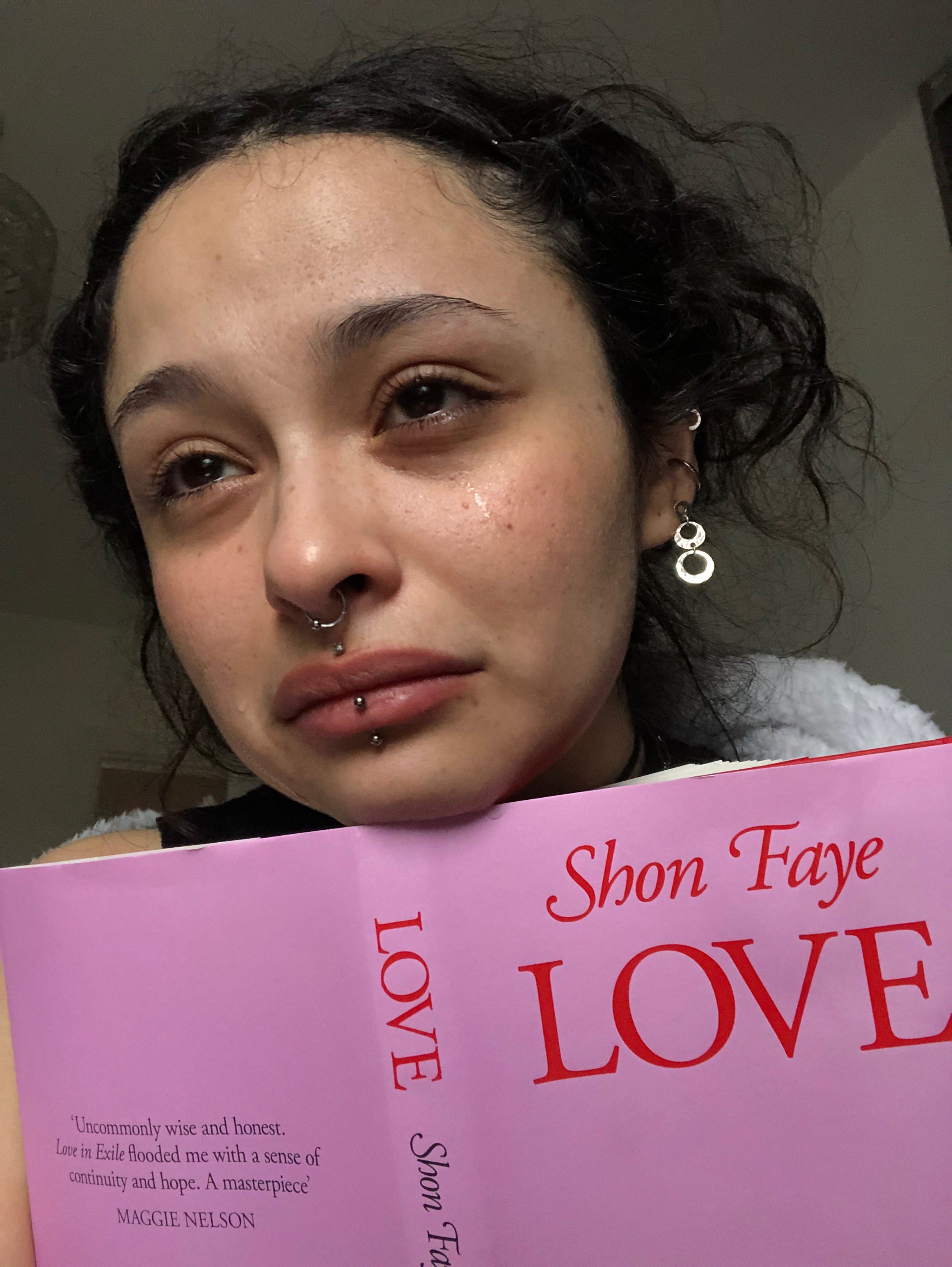
I got to the fourth chapter and then closed the book, settling it on the ground as far away from the bath as I could without getting out. I didn’t want it to get wet.
Sam Gendel & Josiah Steinbrick’s Mouthfeel / Serene continued to hum from the speaker on the ledge. I sank back down into the milk—the embryonic milk—that had now gotten so cold it was getting me close to a shiver. We’d run out of hot water. I still tried the valve. To no surprise, I invited more cold water in. I accepted it, holding in a shake, and sank my head into the liquid once again. To the distorted tempo of the music, I rocked my knees side to side, creating waves that undulated against the walls of the tub and bounced back to touch my skin.
I let my body go loose, my neck in particular, and allowed the buoyancy to suspend me. The water cradled my body and, if I closed my eyes while really trying hard to picture a cave inside an organ that hummed a heartbeat, hummed all guttural, I really could feel—could imagine—what it was like to be inside the womb again.
You know when you close your eyes so tight you can see the red of blood which passes through your eyelids? Like sometimes when you close them so hard you can start seeing faint wisps of shapes form from…? I don’t know why they form, but the shapes were beginning and starting, like shadows dancing along the cave wall.
I moved my body as it beckoned me; neck gyrating, hips too, along with my toes. The more I moved the water, the more it moved me back. And when I raised my knees above, I could feel the water miss me as it tried to compensate for my loss. And when I lowered my knees back down, the water greeted me with another wave.
I stayed in the tub until it got too cold, hypnotised by the feeling of movement and the shadows behind my eyes.

I often forget that you can literally move your body whenever you want to. The sitting, the lying, the walking, the sitting again, the walking, the eating, the talking, the sitting again—it can all get very monotonous, can’t it? Still, I overlook the monotony by finding comfort in its rhythm: predictability is a blanket and who doesn’t like to stay warm?
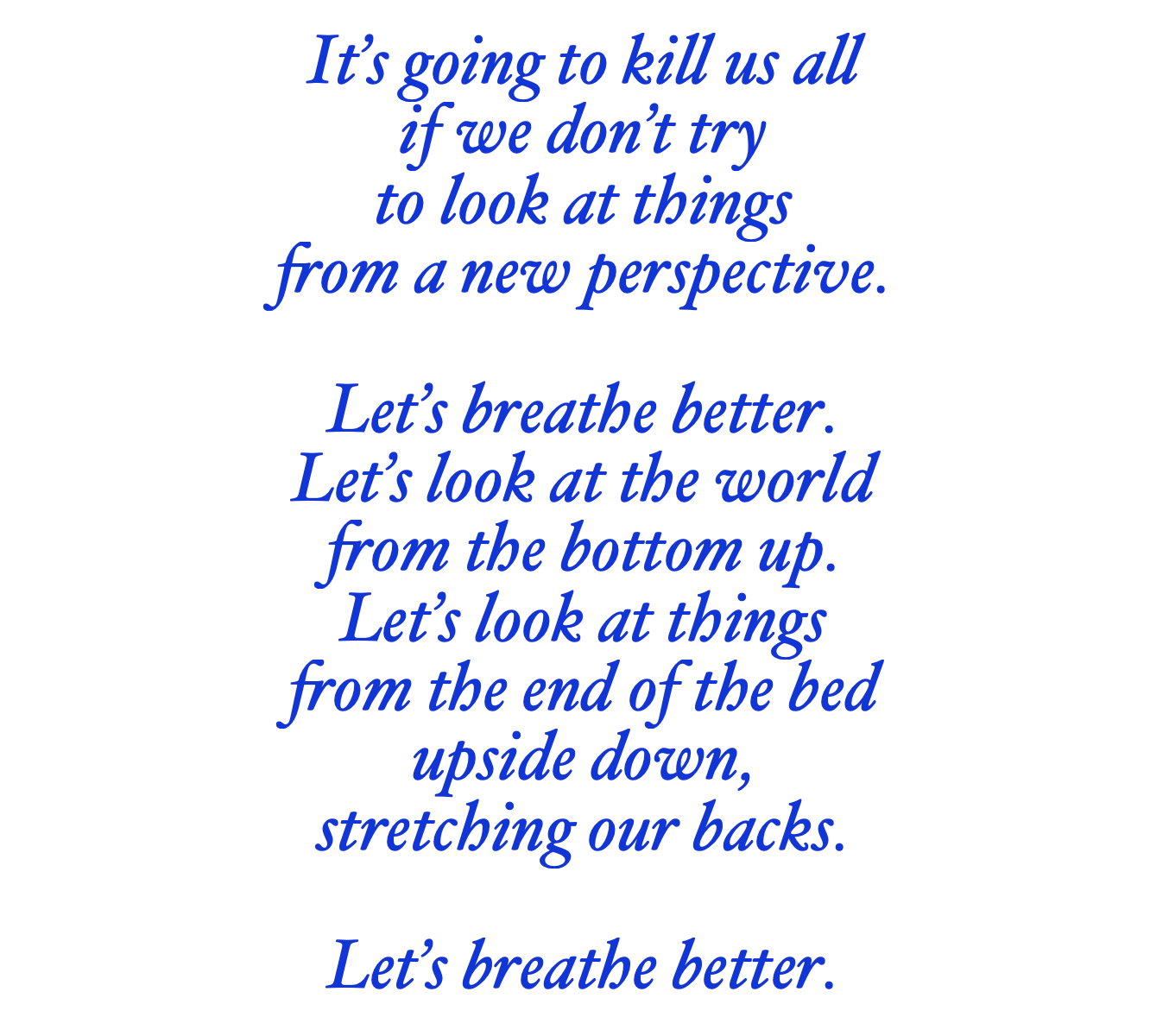
Last night, after complaining to my mother for the sixth night in a row that I really, really should start doing yoga again, I finally willed my body into movement. Lying on my bed, I stretched one leg out in the air, pointing my foot toward the ceiling. I rolled back and forth on the mattress, first toward my leg, then away, before switching sides. I moved into child’s pose. Did some happy cow, then some sad cow. Tried to do a plank but failed — (curse this blessed, soft bed!) — then sank back into child’s pose. I stretched all my limbs into the biggest star I could find inside of me. I then crawled to the end of the bed and dangled my torso over its edge, reaching for the floor with my hands. I turned on my back and did the same thing, this time hanging upside down while thinking ‘This is a stupid idea:

I stared at my room—my new room, the one holding all this new life—while I hung there, inverted. I hung. I stared. I thought. Looking at things a different way really does bring about a new perspective. Everything felt novel yet strangely familiar. Hanging upside down reminded me of all the times I had done this as a kid, back when boredom had no easy cure, back before a phone could lull me into endless stimulation. But though I was looking at things upside-down, I still felt the same, just a bit more open in the chest.
I finished this ten-minute-long routine and then hunched once again as I returned to the comforting blue light of my phone. Modernity is going to kill me!
Today, I felt that sinking stone inside my chest. Instead of lamenting, I have decided to share it with the rest. Though nothing can take away this feeling other than time, I would also like to hold your hand like Shon Faye has done with mine, even if it’s just for a little while.
I find this intimate: you spending time with me. Is it weird to address you so directly, dear reader, or do you like the fact that I’m acknowledging the relationship we’re creating as you follow me into my brain with language? I think I’ve let the brown spiced tea spill everywhere, not just inside the bath. I think the noises of bells and synthesisers, distorted flutes and saxophones, singing bowls, digital chimes, humming bass—all of the noises—are following me into this cave my shut eyes are creating, too.
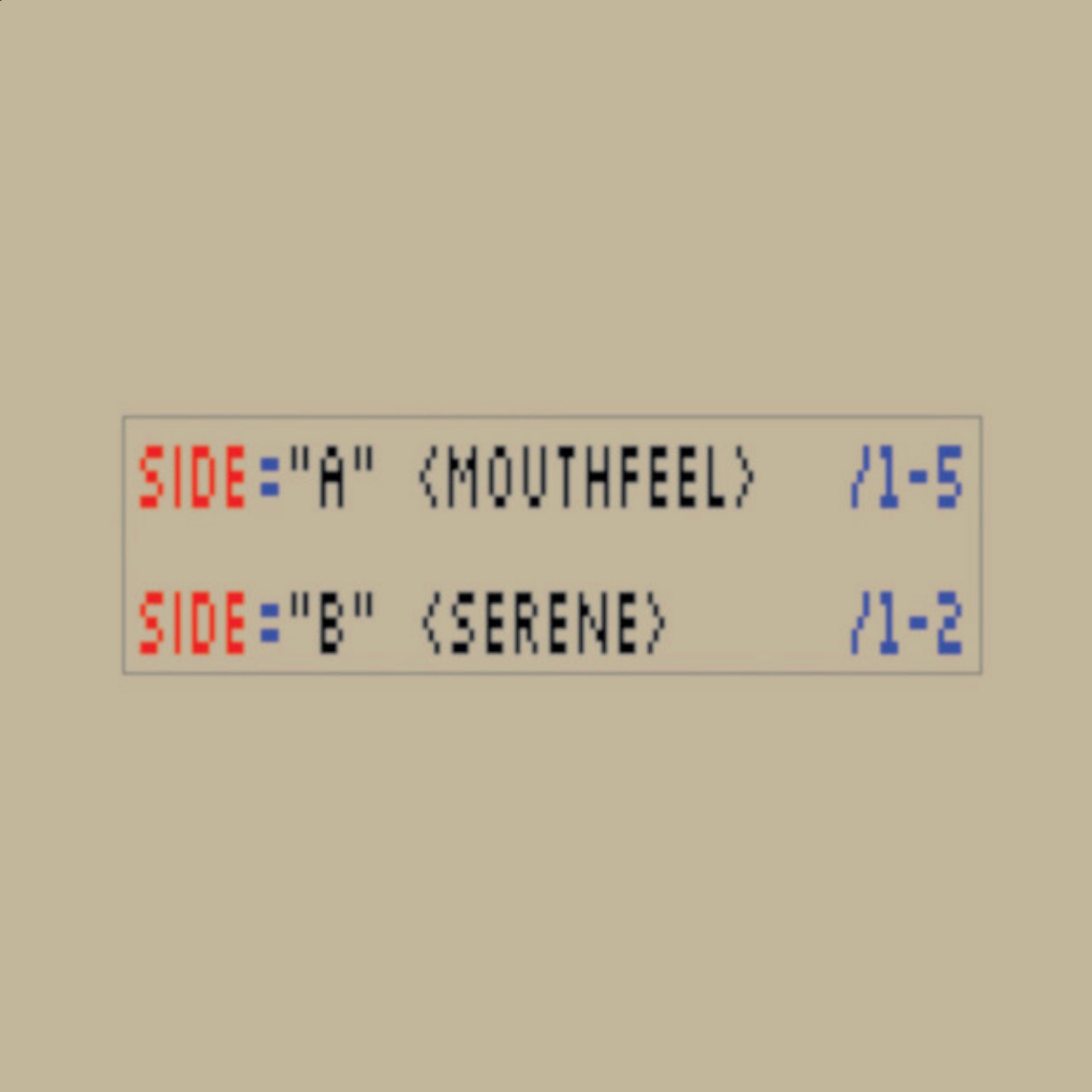
A Review of Sam Gendel & Josiah Steinbrick’s MOUTHFEEL / SERENE
There is a steady hollow tapping that strings together all the songs of this album, yet each track is unique in its own way. The sounds are woody and organic while retaining an eclectic hiccuping of noise with its alien instruments that resemble something familiar yet unplaceable.
This is wobbly nu-jazz at its finest—it’s hardly categorisable, which is why nu-jazz is the only genre I can bring myself to link this album to. I am kept at the edge of my head, accompanied into static thoughts, by a dissonant sax that assaults my ears and reflects my gnawing anxiety. I feel truly understood and it’s all thanks to a lack of language! I do not want description, I want feeling. I want now; I do not want then.
While Gendel & Steinbrick locate that itch of anxiety with cacophony, they also scratch it, remedy it with whole, rounded electronic beats. This album is underwater while at the same time extremely dry. It’s hazy and it’s sharp. It’s futuristic and retro. It is an opposition of noises that blend into friction-filled harmony.
In trying to find more adjectives to aid my lack of language, I came across the word hypnagogic. Mouthfeel 3 showcases this adjective best. I think this song perfectly encompasses the limbo of when one is caught between the two worlds of consciousness and unconsciousness (also known as, That Time Before You Sleep and You’re Pretending To Sleep); when you start feeling your body relax, twitch, as sound quietens… and then suddenly the deadened voice of narration starts again, jolting you away with an image or another anxiety. Once again, shrill reality grasps your mind. But then the breath, again, slows, unbeknownst to you—you’re floating heavy amidst the rude awakening. It all starts to distort and disjoin. Now all that is left is breathy sax. That woody drum joins us again—a concave humdrum of a heartbeat, all repetitive and droning. You’re peacefully asleep by Mouthfeel 5. Then completely absorbed in dreams by the end of the album.
There’s something incredibly grounding about ambient noises in music. It’s as though the sound is not coming from your speaker or your phone but from inside the room, all analogue and honest, not trying to hide behind the digital walls we’re so used to residing inside. Lo-fi music has a way of making the listener feel like there’s something authentic about it, something not over-produced and manufactured like most things are in this world. The ‘imperfection’ of ambient noises leaves you with a feeling of deeply honest sentimentality, and I am gravitating towards that which is raw. The noise is nostalgic. The noise is haunting. The noise feels like home.
